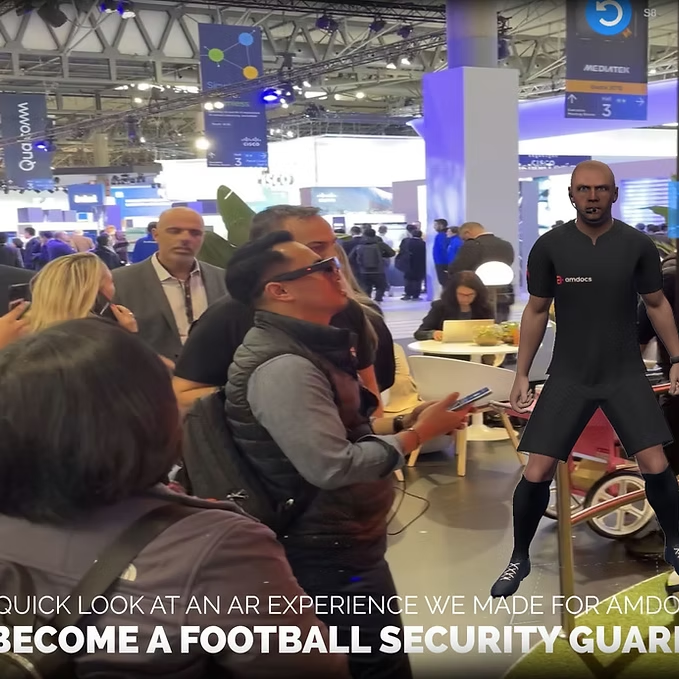
Project from our portfolio
Amdocs · MWC
Spatial content and AR glasses to explain technology stories.
Explore the project →
Augmented reality adds digital content to the world a person sees: a product, image, exhibit or place. Mixed.Place connects AR with storytelling and action so people can discover, play, understand and participate within the physical environment.
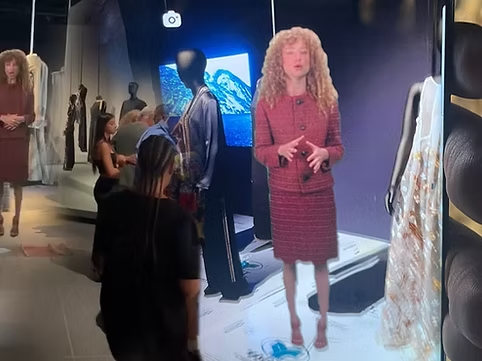
In suitable configurations, a person points a phone at an image or space and encounters a character, animation, model, game or explanation added to the physical view. Depending on the solution, content can also be delivered through augmented reality glasses.
Participants can choose a demonstration scenario, complete a challenge, explore an object or discover another layer of a story. We plan the invitation to enter and the value people gain.
We connect the business objective and audience with a concept, script, content and interface. Entry, a core action and a clear next step are defined before selecting technology around devices, setting, use time and operation.
Augmented reality can reveal an internal product component, demonstrate a process or turn the booth into an interactive challenge. We design the AR content around your message and coordinate the viewing method with the space, equipment and production team.
Explore the area →AR × BRANDAn augmented reality campaign can connect packaging, a product or a location to a branded challenge. The AR content is designed around the campaign idea, with a clear invitation to participate and a relevant next step.
Explore the area →AR × RETAILIn-store augmented reality can add an explanation, animation or game to a product encounter. Customers can discover features and uses in the context of the physical store, with an entry method and duration suited to shopping.
Explore the area →AR × CULTUREAugmented reality can reveal a character, historical scene or detail beside an object or place. The digital layer follows approved sources and curatorial choices, giving visitors another way to explore the story.
Explore the area →AR × TOURISMAR can reveal content anchored to a specific point on a route. Entry, positioning and availability are designed around site conditions and tested with visitors.
Explore the area →AR × LEARNINGAugmented reality can help a learner examine a model, follow a process or connect printed content with a visual explanation. The activity and feedback are designed around a defined learning task.
Explore the area →Augmented reality adds digital content to the view of the physical world. Virtual reality presents a digital environment in place of that view, usually through a dedicated headset.
Some solutions can run in a browser, depending on the device, content and technology. Others need an app or dedicated system. We select the format around the use case and check it on the required devices.
AR determines how digital content meets the space. AI can allow content to respond, such as a character conversing from approved knowledge. Combining them requires a defined role, information sources and conversation design.
Hologram is used to describe different display formats. A digital character seen beside an exhibit through a phone is an AR experience; a dedicated display in the room can work differently. The viewing method should be specified for each project.
A purpose, audience, product or story to explain, operating conditions and timing. From there we define the concept, materials, devices and delivery scope.
Tell us about the product, place or story. We will explore whether AR suits the task and how it could become a clear, engaging experience.
Let’s discuss your AR experience